Tuesday, June 26, 2012

New Worlds from Existing Data

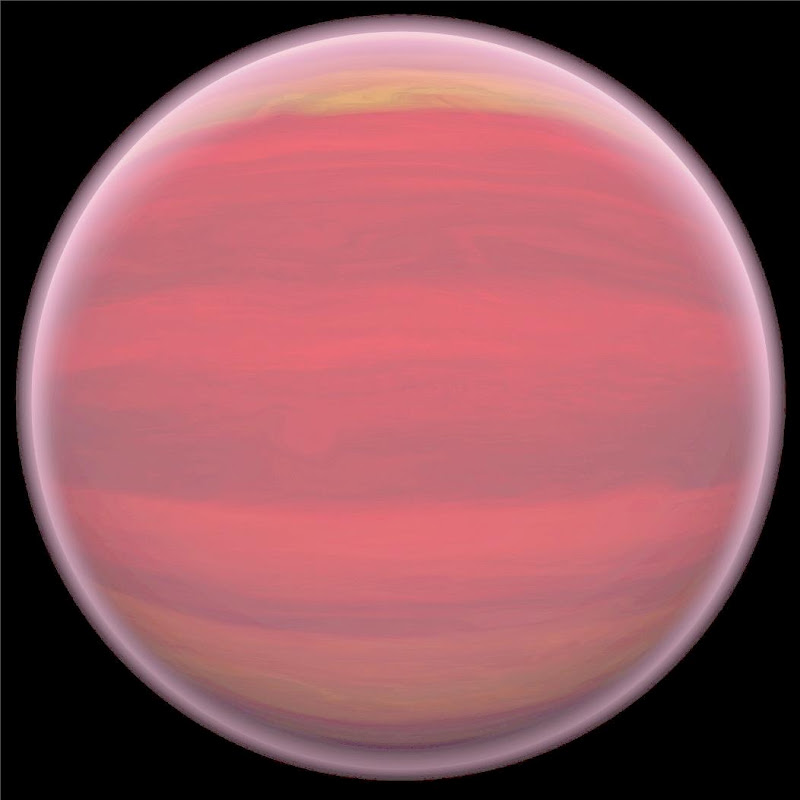
Kepler is a planet-hunting telescope that searches for planets by precisely measuring the dip in a star’s brightness when a planet happens to pass in front of its host star in an event known as a transit. The primary goal of Kepler is to determine the frequency of Earth-like planets around Sun-like stars. To date, over 2000 planet candidates have been found by Kepler with a trend towards an increasing number of Earth-size planet candidates at larger distances from their host stars as such planet candidates are harder and take longer to sniff out. An independent project to reanalyse the existing public Kepler dataset revealed 84 new transit signals on 64 star systems. Each transit signal represents a planet candidate and I shall describe some of the more notable ones.

Image Credit: NASA/JPL-Caltech

KOI 435
This system was known to contain two transit signatures with the first having a period of 20.55 days and the other yet to be determined. The four new transit signatures found in this reanalysis have periods of 3.93 days, 33.04 days, 66.30 days and 9.92 days. Previously, the only know star with six transiting planets was the Kepler-11 system.

KOI 1574
A transiting planet candidate with a period of 114.74 days is known to exist around KOI 1574. In this reanalysis, a second signal with a period of 191.51 days was detected. The outer planet candidate seems to be in a 3:5 orbital resonance with the inner one. What is more interesting is that the outer planet candidate is about twice the Earth’s diameter and its equilibrium temperature is estimated to be 281 degrees Kelvin. Given that the average surface temperature of the Earth is 287 degrees Kelvin, the outer planet candidate of KOI 1574 is a promising Earth-like planet.

KOI 277 (Kepler-36)
Previously known to have a single transiting planet candidate with a period of 13.84 days, this reanalysis found a second transit signal with a period of 16.24 days. The two planet candidates around KOI 277 are remarkable in the sense that their orbits bring them within 5 Earth-Moon distances from one another. On the last day of work on the paper detailing this reanalysis of the Kepler dataset, the Kepler team announced their discovery of the two planets around KOI 277 and named the system Kepler-36. The inner planet (Kepler-36b) is a super-Earth and the outer planet (Kepler-36c) is a mini-Neptune. These planets are twenty times more closely spaced than any adjacent pair of planets in the Solar System. At closest approach, an observer on Kepler-36b will see Kepler-36c appear 2.5 times larger than the Moon as seen from Earth.

KOI 1843
With two planet candidates already known with periods of 4.19 days and 6.36 days, a third transit signal with an incredibly short period of 0.176 days (4.25 hours) was revealed in this reanalysis. For each day on Earth, 5.65 years would have elapsed on this planet candidate. KOI 1843 is a cool and small star with an effective temperature of 3673 degrees Kelvin and 52 percent the Sun’s diameter. The third transit signal has a very small transit depth of 120 parts-per-million which means that this planet candidate is just 68 percent the diameter of the Earth, making it one of the smallest exoplanet candidates known to date.

Reference: Aviv Ofir and Stefan Dreizler (2012), “An Independent Planet Search in the Kepler Dataset. I. A hundred new candidates and revised KOIs”, arXiv:1206.5347v1 [astro-ph.EP]

Thursday, June 14, 2012

Venusian Snow

Although Venus has a similar size, mass, gravity and bulk composition as the Earth, the conditions on its surface are unlike anything on Earth. Venus is characterized by a massive carbon dioxide atmosphere which gives a surface pressure that is over 90 times the sea-level pressure here on Earth and a hellish average surface temperature of 740 degrees Kelvin. Near the surface of Venus, the temperature is above the melting points of metals such as lead, tin and zinc. However, at an altitude of 50 kilometres up in the Venusian atmosphere, the atmospheric temperature and pressure are similar to those found on the Earth at sea-level.

Radar observations of the surface of Venus have shown a brightening of the radar reflection from higher elevation regions on Venus. It is believed that the substance responsible for the higher radar reflectivity formed from a process that is similar to the formation of snow on Earth, albeit at a far higher temperature. The furnace-like environment of Venus’ lower atmosphere means that water is not a possible candidate material for this highly reflective substance. Instead, the highly reflective substance is likely to be a heavy metal frost consisting of one or more types of volatile compounds. In this case, the Venusian highlands serve as areas where the temperature is cool enough for these heavy metal compounds to condense and be deposited as frost. The source of these heavy metal compounds is likely to be volcanic in nature. On Earth, these heavy metal compounds are stable solids but the high temperatures on Venus allow many of these compounds to become volatile.

This is a radar image from NASA’s Magellan spacecraft centred along the eastern edge of Lakshmi Planum and the western edge of Maxwell Montes. The highlands on the right are covered in bright “snow” and are 5 kilometres above the above the adjacent plains in Lakshmi Planum. Credit: NASA/JPL

Standing 11 kilometres high, Maxwell Montes is the tallest mountain on Venus and with a temperature of 650 degrees Kelvin at its summit, the top of Maxwell Montes is the coolest location on the surface of Venus. Radar observations of Maxwell Montes show that most of the mountain is covered a layer of highly reflective substance. For this reason, Maxwell Montes serves as a good example of a cool highland region that is covered by a layer of heavy metal frost and as a “snow-capped mountain” on Earth’s scorching planetary neighbour.

Sunday, June 10, 2012

Ice Floats on Titan’s Lakes

Seas and lakes of liquid hydrocarbons are known to exist on the surface of Titan beneath a thick atmosphere of nitrogen and methane. It is a common assumption that ice on a liquid hydrocarbon lake is negatively buoyant, causing any ice which forms on the lake’s surface to sink towards the bottom. This is because methane ice is denser than liquid methane and this results in a behaviour that is opposite of water where water ice is less dense than liquid water. A paper by Roe and Grundy (2012) titled “Buoyancy of ice in the CH4-N2 system” suggests that contrary to common assumption, the conditions that exist on Titan can allow ice to float on a liquid hydrocarbon lake.

Cassini delivers this stunning vista showing small, battered Epimetheus and smog-enshrouded Titan, with Saturn's A and F rings stretching across the scene. Credit: NASA/JPL/Space Science Institute

Given that nitrogen is the primary constituent of Titan’s atmosphere and nitrogen is soluble in a hydrocarbon mixture, a substantial presence of dissolved nitrogen is expected in the hydrocarbon lakes on Titan. In this study, heavier hydrocarbons are ignored and a liquid solution with a mole fraction abundance of 30.7 percent nitrogen and 69.3 percent methane at a temperature of 88.2 degrees Kelvin is used. In order for ice to start forming, the liquid solution has to be cooled to 78.1 degrees Kelvin where the ice that is formed will have a mole fraction abundance of 16.5 percent nitrogen and 83.5 percent methane. At 78.1 degrees Kelvin, the liquid solution has a density of 0.574 grams per cubic centimetre.

Two methods are used to estimate the density of the ice that is formed. The first method assumes an ideal solution where the weighted mean of the densities of nitrogen and methane are summed up to give a density of 0.564 grams per cubic centimetre. The second method uses a lattice replacement assumption where the lattice structure of the methane ice remains unchanged while a nitrogen molecule replaces a methane molecule and this gives a density of 0.549 grams per cubic centimetre. In either case, the density of the ice is less than the density of the liquid solution and the ice will float. Hence, the decrease in density from the decrease in nitrogen abundance of the ice is larger than the increase in density from the freezing of the liquid solution.

A liquid solution of nitrogen and methane is a simplification since Titan’s lakes contain a mixture of other hydrocarbons and a more accurate study will need to consider these other hydrocarbons. The seasonal variation in surface temperature on Titan is unlikely to be sufficient to allow ice to form on Titan’s lakes. However, it is still possible for ice to be present on the surface of a lake on Titan after a hail storm or a torrential downpour of methane. A hail storm that is large enough can even provide sufficient cooling to freeze the surface of the lake. Raindrops of methane arriving at the surface of a lake from a torrential downpour are expected to be cooler than the local atmosphere and contain some amount of dissolved nitrogen. As the lake consists of a mixture of heavier hydrocarbons, this newly precipitated liquid solution of nitrogen and methane is expected to be less dense and will form a floating layer on the lake’s surface. The volume of this layer can be greatly boosted by drainage from surrounding terrain. Cooling delivered by winds can cause ice to form on this cooler and less dense surface layer of the lake.

When ice floats on the surface of a lake, it isolates the rest of the lake from the atmosphere and allows it to remain liquid beneath. Floating ice also affects the rate of evaporation of methane back to the atmosphere and this can have huge effects on the climate and atmosphere of Titan if lake evaporation is a significant contributor to the atmospheric abundance of methane.

Thursday, May 31, 2012

An Odd Planet

A recent paper by John Asher Johnson et al. (2012) titled “Characterizing the Cool KOIs. II. The M Dwarf KOI-254 and Its Hot Jupiter” describes the discovery of the first hot Jupiter around a red dwarf star. Red dwarf stars are the coolest and least massive type of stars, and they also make up the majority of stars. The star involved is called KOI-254 and a gas giant planet orbits it once every 2.455 days. This gas giant planet is designated KOI-254 b and it was originally discovered by the Kepler mission from its periodic transits in front of KOI-254. During each transit, KOI-254 dims by 3.909 percent and from this, the size of KOI-254 b is estimated to be 0.96 times the diameter of Jupiter.


Radial velocity observations measuring the gravitational tug exerted by KOI-254 b on KOI-254 gives KOI-254 b a mass of 0.505 times the mass of Jupiter. The estimated equilibrium temperature of KOI-254 b is 1000 degrees Kelvin. What makes KOI-254 b unique is that it is the first known Jupiter-mass planet in a short period orbit around a red dwarf star. Apart from KOI-254 b, there is no known planet above 0.2 times the mass of Jupiter orbiting a red dwarf star with an orbital period of less than 10 days. Given the fact that close-in Jupiter mass planets should be readily detected around red dwarf stars, the lack of such planets mean that KOI-254 b is likely to be the only known example of a hot Jupiter around a red dwarf star for some time.

Tuesday, May 29, 2012

Climate Control Using Nuclear Energy


Anthropogenic low pressure regions occur when heat generated from human activities is injected into the atmosphere. Good examples include large coastal cities and large fires near coastal areas. For instance, the Kuwait oil fires during the Gulf War injected sufficient heat into the atmosphere to sustain heavy rainfall over the area. This occurs when the low pressure region created by the heat draws moist air from the Arab sea and the aerosols emitted by the fires serves as condensation nuclei for the moist air.

Deserts cover one third of the Earth’s land surface and they are characterised by extremely low amounts of precipitation. Strong solar heating during the day forms a natural low pressure region over a desert while at night; this is replaced by a high pressure region as heat absorbed during the day is rapidly lost. This creates a tendency for moist air over a neighbouring ocean to be drawn towards the desert during the day with the reverse occurring at night. Such a daily oscillation of airflow is unable to push moist air into the desert interior.


The injection of heat from nuclear reactors situated in the middle of a desert can maintain a persistent low pressure region and the constant suction can draw moist air from the ocean deep into the desert’s interior. This is expected to lead to an increase in the amount of precipitation and can potentially transform the desert landscape, allowing an increase in vegetation cover and creating more land for agriculture and human habitation. A cluster of nuclear reactors with a net heat output of 10 billion watts can create an effective suction radius of a couple of thousand kilometres around it. For example, if it were situated in the interior of the Sahara, it can draw in moist air from the Atlantic Ocean and Mediterranean Sea, transforming the Sahara into a lush and fertile region.

During the day, the surplus heat energy produced from the nuclear reactors can be converted into electricity or can be used to convert atmospheric carbon dioxide into commercial-grade gasoline, diesel fuel and jet fuel. The use of such hydrocarbon-based fuels is carbon neutral since the net amount of carbon dioxide released back into the atmosphere is zero.

References:
1. Moninder Singh Modgil (2002), “Large Scale Weather Control Using Nuclear Reactors”, arXiv:physics/0210008v1 [physics.ao-ph]
2. Moninder Singh Modgil (2008), “Climate Control Using Nuclear Energy”, arXiv:0801.0320v1 [physics.gen-ph]

Friday, March 9, 2012

Nitrogen Geysers

Triton is by far the largest moon in orbit around Neptune and with a diameter of 2700 km; it is the seventh largest moon in the Solar System. Triton is also more massive than the combined mass of all known moons in the Solar System that are smaller than Triton itself. The orbit of Triton around Neptune is retrograde and this means that Triton orbits in a direction that is opposite to Neptune’s rotation. For this reason, it is believed that Triton did not form in orbit around Neptune. Instead, Triton is a captured Kuiper belt object. Triton’s surface is largely covered by frozen nitrogen overlying a water ice crust. With a mean density of 2.061 grams per cubic centimetre, the composition of Titan is approximately one-third water ice and two-thirds rock material.

Credit: Walter Myers

The only spacecraft to have ever visited Triton was NASA’s Voyager 2 which made a flyby of Triton in August 1989. During the flyby, Voyager 2 imaged geyser-like eruptions occurring on the surface of Triton. In these images, the geyser-like eruptions appear as columns of dark material rising to an altitude of about 8 km before trailing off over a hundred kilometres downwind. The dark material carried within these plumes gets deposited onto the surface of Triton, explaining the presence of dark streaks seen in the images acquired by Voyager 2. Measurements have shown that Triton has a globally uniform surface temperature of about 38 degrees Kelvin (minus 235 degrees Centigrade) and a predominantly nitrogen atmosphere with a surface pressure of approximately 16 micro-bars.

During the flyby of Voyager 2, Triton is experiencing southern summer where the Sun appears directly overhead at a latitude of 45 degrees south on the surface of Triton. The inclination of Triton’s orbit around Neptune and the inclination of Neptune’s spin axis means that Triton has an overall tilt of 53 degrees with respect to the Sun. In comparison, the Earth has a tilt of 23.5 degrees. The geyser-like eruptions on Triton occur when sunlight is absorbed by dark particles encased within the frozen nitrogen on Triton’s surface. This acts as a form of greenhouse effect which causes the temperature of the nitrogen ice to increase. A rise in temperature of only 4 degrees Kelvin is sufficient to increase the vapour pressure of nitrogen ice by an order of magnitude.

With the overlying layers of ice acting as a seal, the subliming nitrogen ice produces nitrogen gas which migrates into porous regions within the subsurface. Such a process charges the subsurface with pressurized nitrogen gas. When a fracture or weakness in the overlying ice layers is encountered, the nitrogen gas explosively decompresses and launches itself into the atmosphere of Triton. The sudden decompression of nitrogen gas causes a fraction of the nitrogen gas to condense into nitrogen ice crystals. Entrained within the erupting plume are fine dust particles and nitrogen ice crystals. At about 8 km in altitude, the plume trails off due to the shearing effect from high altitude atmospheric winds.


Given a temperature difference of 4 degrees Kelvin, the estimated initial velocity of an erupting plume can be as high as 180 m/s. In fact, an initial velocity of 100 m/s is enough to launch a plume to an altitude of 8 km. The estimated mass flux of nitrogen gas from a single erupting plume is about 400 kg/s and the power required to sustain such a mass flux is on the order of a hundred million watts. Given that the solar radiation incident on Triton is 1.5 watts per square meter and assuming that two-thirds of the incident solar radiation gets absorbed by the subsurface nitrogen ice, a surface area of about 100 square kilometres is needed to collect the power necessary to drive the mass flux.

Reference: L. A. Soderblom, et al., “Triton's Geyser-Like Plumes: Discovery and Basic Characterization”, Science 19 October 1990: Vol. 250 no. 4979 pp. 410-415

Wednesday, March 7, 2012

Shifting Sands of Titan

Titan is an ideal environment for the formation of sand dunes as its low gravity and dense atmosphere allows sand particles to be transported even with low wind speeds. In the Solar System, Venus, Earth, Mars and Titan are the only known worlds where sand dunes can be found. Giant sand dunes cover one-fifth of Titan surface and they are confined to a belt within 30 degrees north and south of the equator. The sand dunes show remarkably uniform west-east orientation and based upon the manner in which the sand dunes divert around topographic obstacles, it is clear that they are deposited by winds that blow eastward. This is puzzling because the winds around Titan’s equator should be blowing westward, resulting in sand dunes with westward depositional patterns.

Figure 1: Titan’s golden, smog-like atmosphere and complex layered hazes appear to Cassini as a luminous ring around the planet-sized moon. (Credit: NASA/JPL)

On Earth, the surface transfers angular momentum to the overlying atmosphere by pulling the atmosphere with it as the Earth rotates. Since the Earth’s equator is the furthest part of the Earth from the spin axis, it has the most angular momentum. As a result, the atmosphere at the equator should rotate no faster than the surface and this produces the generally westward winds found around the Earth’s equator. These winds are also commonly known as the trade winds and for centuries, they have been used by sailing ships to cross the world’s oceans. Therefore, the sand dunes around Titan’s equator which generally have eastward depositional patterns are contrary to what is expected as the winds around Titan’s equator should instead be blowing westward.

Indeed, atmospheric models (Tokano 2010) show that like the Earth, the low latitude surface winds around Titan’s equator do blow westward. However, there is a brief episode which occurs twice every Titan year (29.5 Earth years) where stronger eastward winds appear in the low latitudes. This occurs near equinox when the inter-tropical convergence zone (ITCZ) crosses the equator of Titan and causes the winds to briefly reverse direction from westward to eastward. Since a threshold windspeed is required for sand particles to start moving, even though the winds blow westward most of the time, the sand particles only respond to the stronger but less frequent eastward winds.

Figure 2: Simplified global atmospheric circulation and precipitation patterns on Titan and Earth. (Credit: P. HUEY/SCIENCE)

On Earth, the ITCZ encircles the equator and it is where winds originating in the northern and southern hemispheres converge. However, Earth’s ITCZ does not migrate far and generally stays within the tropics. In contrast, Titan’s ITCZ migrates from pole to pole and rarely stays on the equator. This is due to Titan’s slow rotation of 15 days and 22 hours. Titan’s ITCZ carries with it methane rain clouds and it is where most precipitation occurs as air ascends as a result of converging surface winds from the northern and southern directions. Technically, this means that Titan has a ‘tropical climate’ spanning pole to pole, although its surface temperature is a frigid minus 180 degrees Centigrade.

Figure 3: An artist’s conception of Titan’s sand dunes. (Credit: Kees Veenenbos)

The sand dunes on Titan have similar geometries with those on Earth and some of the best terrestrial examples are the giant sand dunes found in the Namibian desert as they are directly comparable in size and spacing to those on Titan. Like those on the Earth, the sand dunes on Titan are typically one-third as wide as their crest-to-crest spacing. Titan’s sand dunes are generally spaced about 2.5 kilometres apart and have dune heights ranging from 100 to 150 metres. These dunes also stretch hundreds of kilometres in length. One fundamental difference between the sand dunes of Titan and those on Earth is that the sand dunes on Titan are not made of silicate sand particles like those on Earth. Instead, the sand dunes on Titan are made of solid particles of water ice or millimetre-sized aggregates of solid hydrocarbons that precipitate out of the atmosphere.

References:
1. Tetsuya Tokano, “Relevance of fast westerlies at equinox for the eastward elongation of Titan’s dunes”, Aeolian Research 2 (2010) 113-127
2. R. D. Lorenz, et al., “The Sand Seas of Titan: Cassini RADAR Observations of Longitudinal Dunes”, Science 312, 724 (2006)

Monday, March 5, 2012

Worlds with two Suns

A circumbinary planet is a one which orbits around a pair of normal stars. Kepler-16b became the first known circumbinary planet when it was discovered in 2011. Since then, two more circumbinary planets have been discovered and they are Kepler-34b and Kepler-35b. All three circumbinary planets known to date were found by NASA’s Kepler space telescope which detects planets around other stars by searching for tiny dips in a star’s brightness when a planet happens to cross in front of its parent star. Both Kepler-34b and Kepler-35b are low-density gas-giant planets and their orbits are closely aligned with that of their parent stars such that each planet is observed to transit both its parent stars. The planets Kepler-34b and Kepler-35b were identified using 671 days of data from the Kepler space telescope.

Figure 1: An artist’s conception of Kepler-34b: a gas-giant planet that orbits a pair of Sun-like stars. Credit: David A. Aguilar (CfA)

Kepler-34b orbits a pair of Sun-like stars every 289 days where both the Sun-like stars orbit around each other every 27.8 days. For Kepler-34b, its discovery was determined from 3 detected transit events. The first and second transits are of the primary star (Kepler-34A), while the third is of the secondary star (Kepler-34B).

Figure 2: An artist’s rendition of Kepler-35b circumbinary planet. Credit: Lior Taylor

Kepler-35b orbits a pair of stars every 131 days. Each star in the Kepler-35 system is somewhat smaller than the Sun and both stars orbit around each other every 20.7 days. For Kepler-35b, its discovery was determined from 4 detected transit events. The first, second and fourth transits are of the primary star (Kepler-35A), while the third is of the secondary star (Kepler-35B).

Circumbinary planet system parameters for Kepler-34b, Kepler-35b and Kepler-16b:

Kepler-34b Kepler-35b Kepler-16b
Planet’s Properties:
Mass of planet (Earth = 1) 69.9 40.4 106
Mass of planet (Jupiter = 1) 0.220 0.127 0.333
Radius of planet (Jupiter = 1) 0.764 0.728 0.754
Mean density of planet (kg/m3) 0.613 0.410 0.964
Planet’s surface gravity (m/s2) 9.36 5.96 14.5
Planet’s surface gravity (Earth = 1) 0.954 0.608 1.48
Properties of Planet’s Orbit:
Orbital period (days) 289 131 229
Semi-major axis (AU) 1.09 0.603 0.705
Orbital eccentricity 0.182 0.042 0.007
Properties of the Stars:
Mass of primary (Sun = 1) 1.05 0.888 0.690
Radius of primary (Sun = 1) 1.16 1.03 0.649
Mass of secondary (Sun = 1) 1.02 0.809 0.203
Radius of secondary (Sun = 1) 1.09 0.786 0.226
Properties of Stars’ Orbit:
Orbital period (days) 27.8 20.7 41.1
Semi-major axis (AU) 0.229 0.176 0.224
Orbital eccentricity 0.521 0.142 0.159

For Kepler-34b and Kepler-35b, the average insolation received by each planet is 2.4 and 3.6 times the Earth’s insolation respectively. Furthermore, the maximum-to-minimum insolation ratios for Kepler-34b and Kepler-35b are 250 percent and 160 percent respectively. Such highly variable and multi-periodic fluctuations in insolation are unique to circumbinary planets, and are expected to lead to complex climate cycles and interesting atmospheric dynamics. Together with Kepler-16b, the discovery of Kepler-34b and Kepler-35b establishes circumbinary planets as a new class of planets. A unique feature of these 3 circumbinary planets is that the orbital plane of each planet is remarkably coplanar with the orbital plane of its central binary stars. Based on a conservative estimate, millions of nearly coplanar circumbinary planets are expected to exist in this galaxy alone.

Reference: Welsh, et al. “Transiting circumbinary planets Kepler-34 b and Kepler-35 b”, Nature 481, 475–479 (26 January 2012)

Sunday, March 4, 2012

A Titan Airplane Mission Concept

Titan is the largest moon in orbit around Saturn and the second largest moon in the Solar System. Like the Earth, Titan has a fully developed atmosphere and stable bodies of liquid on its surface. Titan’s atmosphere is both denser and more extended than the Earth’s. Opaque haze layers within the atmosphere obscure the entire surface of Titan, making Titan appear as a featureless globe from afar. The first ever close-up image of Titan was taken by Pioneer 11 in 1979. Subsequently, both Voyager 1 and 2 flew-by Titan in 1980 and 1981 respectively. The Cassini-Huygens spacecraft arrived at Saturn in 2004 and started mapping the surface of Titan by radar. On 14 January 2005, the European Space Agency’s (ESA) Huygens probe landed on the surface of Titan, making Titan the second moon to have a man-made object land on its surface.

An artist’s conception of Titan with Saturn in the background. (Credit: Kees Veenenbos)

The Aerial Vehicle for In-situ and Airborne Titan Reconnaissance (AVIATR) is a proposed Titan airplane mission. Its primary component is a 120 kg Unpiloted Aerial Vehicle (UAV) that will fly in the atmosphere of Titan for a planned mission duration of one Earth-year. Titan is the best place to fly an airplane in the whole Solar System because its atmosphere is 4 times denser than the Earth’s and its gravity is 7 times weaker than on Earth. The high atmospheric air density and the low gravity make it much easier for an aircraft to maintain lift as less power is required.

An artist’s conception of AVIATR, an airplane mission to Titan. (Credit: Mike Malaska 2011)

The low power requirements make it feasible for the UAV to be powered by electricity generated from a pair of Advanced Stirling Radioisotope Generators (ASRGs). An ASRG generates electricity from heat produced by the decay of radioactive plutonium-238. Given that the half-life of plutonium-238 is 87.7 years, an ASRG can provide adequate power for a very long period of time. Compared to a Radioisotope Thermoelectric Generator (RTG), an ASRG requires 4 times less plutonium-238 to produce the same amount of useful power. Based on a conservative estimate, the pair of ASRGs is expected to produce 254 watts of power. For this mission, solar energy cannot be employed due to the scarcity of available solar radiation.

Exploring Titan from an airplane has a number of advantages over a balloon. An airplane is able to fly much faster than a balloon and this allows the airplane to constantly fly on the sunlit side of the moon to maintain direct and continuous communication with the Earth. From Titan, the Earth will always appear no more than 6.5 degrees from the Sun. A balloon’s flight path is largely determined by the direction of atmospheric winds. However, an airplane is much more robust against atmospheric winds and it can be directed to study specific regions. This makes it more desirable for an airplane to visit places such as the poles where Titan’s most violent meteorological activities tend to occur. Furthermore, a traditional hot-air balloon on Titan will require much more power that what an ASRG can provide.

Titan’s thick and extended atmosphere means that a spacecraft that is in orbit around Titan must maintain a distance of over 1000 km from the surface as atmospheric drag at lower altitudes will cause the orbit of the spacecraft to rapidly decay. In comparison, a spacecraft in orbit around Mars can come within 300 km from the Martian surface and this is favourable for the spacecraft to obtain high resolution images. As such, close-up imaging of Titan’s surface to obtain high resolution images cannot be fully realised using an orbiting spacecraft. For this reason, an airplane is more desirable for obtaining high resolution images of Titan’s surface. The UAV used for the AVIATR mission will climb up to 14 km altitude and descend down to 3.5 km altitude once per Earth day. An onboard radar altimeter will be used to measure the UAV’s height above the ground within the altitude range of 0 to 15 km.

The UAV communicates directly to Earth using a steerable high gain parabolic antenna that is contained within a streamlined aerodynamic fairing. When the UAV is not transmitting data back to Earth, it can use the excess power to climb to a higher altitude. This allows the excess energy to be stored as gravitational potential energy so that when data is required to be transmitted back to Earth, extra energy can be obtained by reducing power to the UAV’s propeller and allowing the UAV to descent in altitude. Such a technique acts as a ‘gravity battery’ for the UAV.

A total of 7 science instruments will be fitted on the UAV. To take advantage of the mobility and flexibility of the airplane, the cameras are fitted to the body of the airplane such that the cameras are pointed by tilting the aircraft. Because of this feature, there are no moving parts in any of the science instruments.

Instrument Description Mass
HR21 High-Resolution 2-micron Imager 3.5 kg
HLI Horizon-Looking Imager 2.2 kg
ABIS AirBorne Imaging Spectrometer 3.6 kg
Altimeter Engineering RADAR Altimeter -
WASS Winds and Atmospheric Structure Suite 0.3 kg
ADS Aerosol Density Sensor 0.11 kg
SRD Student Raindrop Detector 0.3 kg

 An artist’s conception of Titan’s sand dunes. (Credit: Walter Myers)

Titan, Venus, Earth and Mars are the only 4 worlds in the Solar System that have both well developed atmospheres and solid surfaces. Strong interactions between the surface and the lower atmosphere are prevalent in each of these 4 worlds. Furthermore, Titan, Earth and Mars have numerous surface features that are sculptured by fluvial erosion. The large number and complexity of processes acting on Titan gives rise to a diversity of surface landforms that rivals the Earth. Titan is also the only other place in the Solar System where it rains. The primary objective of AVIATR is to explore the surface of Titan and its lower atmosphere. Therefore, the scientific goals of AVIATR can be categorized into surface geology or atmospheric science.

1.         Surface Geology
            1.1       Lakes and Seas
a.         Understand sea/land interactions from diversity of shoreline interfaces.
b.         Characterize atmosphere/lake interaction from wave dynamics.
c.         Determine lake histories from shoreline changes and layering.
                        d.         Constrain flux of liquids and sediments into and inside of lakes.
            1.2       Hydrology
                        a.         Characterize erosion using the diversity of channel bedforms.
b.         Determine where currently extant surface liquids exist and why.
c.         Assess the nature and efficacy of sediment transport from streambeds.
            1.3       Dunes
                        a.         Ascertain the present state of activity in Titan's dune fields.
b.         Measure the wind and climate regime for dune formation and evolution.
c.         Infer climatic changes over varying timescales from compound dune forms.
d.         Study the global cycle of aeolian sediment production and transport.
1.4       Mountains
a.         Determine the faulting regime that creates Titan's mountains.
b.         Infer geological and climatic history from layering exposed in mountain faults, incised channels, and craters.
c.         Evaluate the cryovolcanic nature of proposed flow features.
1.5       Exploration
a.         Explore the mid latitude “blandlands” and other areas not well explored.
b.         Identify potential landing sites of scientific interest and constrain safety.
c.         Search for prebiotic molecules and     evidence for astrobiological activity.

2.         Atmospheric Science
2.1       Winds & Structure
a.         Trace global circulation via measurement of zonal and meridional winds in the troposphere.
b.         Constrain the methane cycle by measuring the global atmospheric transport patterns of methane.
c.         Understand the diversity of atmospheric stability in the context of global circulation.
            2.2       Clouds & Rain
                        a.         Characterize clouds' diversity using particle number densities.
b.         Constrain global circulation and cloud formation by determining clouds' vertical structure and time evolution.
c.         Ascertain where, when, how often, and how intensely it rains on Titan.
2.3       Haze
a.         Measure the spatial variability of haze scattering properties.
b.         Constrain global patterns of haze production, transport, and time evolution.
c.         Constrain the rate of haze sedimentation on Titan's surface.

 An artist’s conception of Titan’s hydrocarbon sea. (Credit: Walter Myers)

An artist’s conception of Titan’s hydrocarbon sea. (Credit: Kees Veenenbos)

The AVIATR spacecraft stack consists of the space vehicle and the entry vehicle. Encapsulated within the aeroshell of the entry vehicle is the UAV. Key components of the entry vehicle consists of an ablative Thermal Protection System (TPS) and a parachute subsystem consisting of a supersonic drogue parachute, a subsonic main parachute, a deployment mortar and a parachute containment can. The space vehicle is a purpose-built cruise stage that is mounted to the aft-body of the entry vehicle. Key components of the space vehicle include a 110 cm diameter spherical titanium propellant tank, one 445 N rocket thruster for high velocity change manoeuvres and a Guidance, Navigation, and Control (GN&C) subsystem.

An Atlas V launch vehicle will be used to launch the entire AVIATR spacecraft stack into space. The AVIATR mission design trajectory involves a 7 years and 8 months cruise between Earth and Titan. During the cruise phase, the spacecraft will make one flyby of Earth and one flyby of Jupiter. Before the entry vehicle enters Titan’s atmosphere, it separates from the space vehicle by the firing of pyrotechnic bolts. The entry vehicle will enter Titan’s atmosphere at a relative velocity of 5.72 km/s and then decelerate for 270 seconds to the parachute deployment speed and altitude of Mach 1.5 and 175 km respectively. A supersonic drogue parachute is deployed which decelerates the entry vehicle to Mach 0.5. Subsequently, the main parachute is deployed which slows the entry vehicle to a terminal velocity of 20 m/s where the heat shield is jettisoned and the UAV is released to begin flight operations.

AVIATR is likely to operate well beyond its one year nominal mission duration. This is because there are no expendables that pose a limit to the total flight time of the UAV except for the slow decay of radioactive plutonium-238 in the ASRGs. For this reason, the UAV is expected to keep flying until a mechanical failure occurs or until funding terminates.

Reference: Jason W. Barnes et al. (2011), “AVIATR - Aerial Vehicle for In-situ and Airborne Titan Reconnaissance”

Friday, March 2, 2012

Ramjets to the Stars

The fundamental problem encountered with any form of space travel is the large amount of energy required and finding a means to supply it. A spacecraft which carries all of its fuel is very inefficient as a large amount of energy has to be spent transporting this very fuel. This is especially true for spacecraft that need to attain very high velocities such as in the case for interstellar space travel. The distances involved in interstellar space travel are so huge that even getting to the nearest stars, a spacecraft needs to travel at a significant fraction of the speed of light in order to arrive within a human lifespan.


The ship was not small. Yet she was the barest glint of metal in that vast web of forces which surrounded her. She herself no longer generated them. She had initiated the process when she attained minimum ramjet speed; but it became too huge, too swift, until it could only be created and sustained by itself… Starlike burned the hydrogen fusion, aft of the Bussard module that focused the electromagnetism which contained it. A titanic gas-laser effect aimed photons themselves in a beam whose reaction pushed the ship forward - and which would have vaporized any solid body it struck. The process was not 100 per cent efficient. But most of the stray energy went to ionize the hydrogen which escaped nuclear combustion.
- Paul Anderson

Proposed by physicist Robert W. Bussard in 1960, the ramjet is a method of spacecraft propulsion where the basic idea is to collect fuel from the rarefied interstellar medium to propel the spacecraft. Projecting out in front of a ramjet is an enormous ramscoop which collects hydrogen protons from the interstellar medium and funnels them into a central fusion engine which fuses hydrogen into helium to generate thrust. The enormous size of the ramscoop means that it can only be made up from an immaterial net of electromagnetic forces. If the process of hydrogen fusion is 100 percent efficient, the speed of the ramjet can approach arbitrarily close to the speed of light.

In practice, radiation loss is expected to occur and this prevents the hydrogen fusion process from being 100 percent efficient. Hence, the maximum speed of such a ramjet cannot come arbitrarily close to the speed of light. For example, if 20 percent of the fusion energy is lost as thermal radiation, the maximum speed attainable by the ramjet as a percentage of the speed of light will be 89.41 percent. This lowers the performance of the ramjet as an interstellar spacecraft. Interestingly, this also lowers its performance as a ‘time machine’ for the exploration of the future.


A brief mission study is now presented to show the performance of a hypothetical ramjet. The fusion reaction occurring within the ramjet’s fusion reactor is assumed to have a mass-to-energy conversion efficiency of 0.71 percent and of the energy generated, 80 percent gets converted into useful propulsive energy while 20 percent is lost as thermal radiation. The ramjet is assumed to have a total mass of 10,000 metric tons and a ramscoop intake diameter of 7,000 kilometres. Finally, the interstellar medium is assumed to have a density of one proton per cubic centimetre. Starting from an initial velocity of 1 percent the speed of light, the time required for the ramjet to accelerate to 80 percent the speed of light is 454 days and the distance covered during this time is 0.632 light years or 5.98 trillion kilometres. Due to the effect of special relativity, the time elapsed for an observer onboard the ramjet is 369 days.

Alpha Centauri is a binary star system located at a distance of 4.37 light years away. Aimed for a flyby of Alpha Centauri and starting with an initial velocity of 1 percent the speed of light, the same ramjet will take 2006 days to get to Alpha Centauri. Onboard the ramjet, an observer will experience a time elapse of just 1103 days. However, the flight duration will be somewhat longer if the ramjet were to gradually decelerate to a stop as it approaches Alpha Centauri. Things become more interesting if the fusion engine of the ramjet is 100 percent efficient where all of the energy generated from the fusion process gets converted into useful propulsive energy. In this case, the ramjet will take 1818 days to get to Alpha Centauri, while an onboard observer will experience a time elapse of 626 days.

References:
1. Bussard R W (1960), “Galactic matter and interstellar flight”, Astronautica Acta. 6:179-194.
2. C. Semay and B. Silvestre-Brac (2007), “Equation of motion of an interstellar Bussard ramjet with radiation loss”, Acta Astronautica, Volume 61, Issue 10, p. 817-822.