Monday, August 8, 2016

EPIC 211391664b is a Warm Neptune-Sized Planet


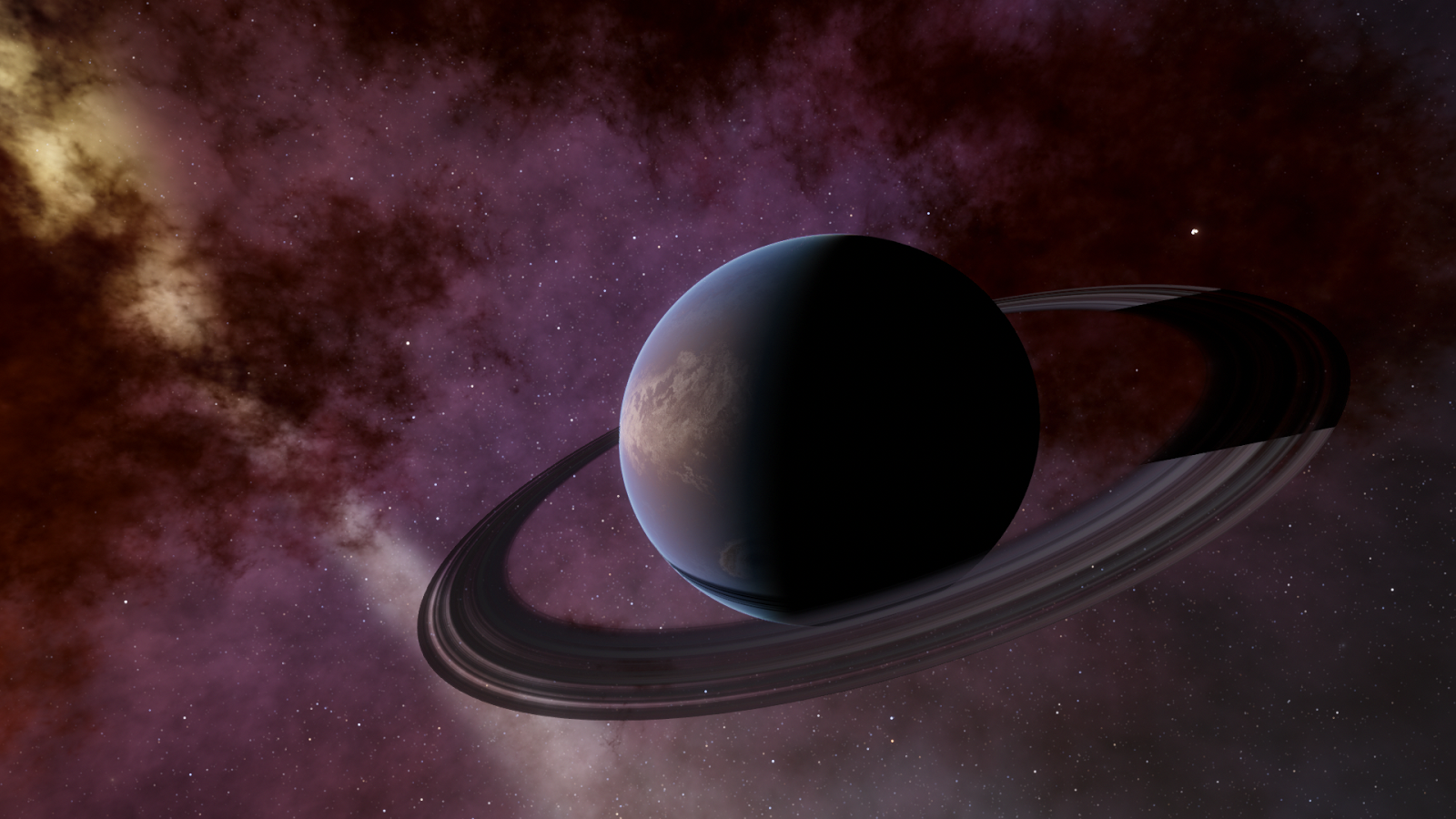
Barragán et al. (2016) present the detection of EPIC 211391664b, a transiting Neptune-sized planet in a 10.14 day orbit around an F-type star that is located ~1400 light years away. From transit and radial velocity observations, EPIC 211391664b has ~4.3 times the radius and 32.2 ± 8.1 times the mass of Earth. For comparison, Neptune has 3.9 times the radius and 17.1 times the mass of Earth. Although only slightly larger in size than Neptune, EPIC 211391664b has almost twice the mass of Neptune. EPIC 211391664b joins a relatively small group of Neptune-sized planets whose mass and radius are known to better than 3σ. The equilibrium temperature on EPIC 211391664b is estimated to be ~1100 K. In about 3 billion years from now, EPIC 211391664b is expected to be engulfed as its host star evolves into a red giant.

Reference:
Barragán et al. (2016), “EPIC 211391664b: A 32-Mᴇ Neptune-sized planet in a 10-day orbit transiting an F8 star”, arXiv:1608.01165 [astro-ph.EP]

Sunday, August 7, 2016

A Year on KELT-16b is Less than 24 Hours


Oberst et al. (2016) present the discovery of KELT-16b, a highly irradiated, ultra-short period hot-Jupiter transiting a relatively bright F-type main sequence star. Transit and radial velocity observations indicate that KELT-16b has ~1.415 times the radius and ~2.75 times the mass of Jupiter, giving it a mean density of roughly 1.2 times the density of water. KELT-16b circles its host star every 23 hours 15 minutes. This planet joins WASP-18b, WASP-19b, WASP-43b, WASP-103b and HATS-18b as the only transiting hot-Jupiters with orbital periods under a day. The host star of KELT-16b has ~ 1.211 times the mass and ~ 1.360 times the radius of the Sun, and its effective temperature is 6236 ± 54 K.

Due to its ultra-short orbit, KELT-16b is highly irradiated by its host star, and its estimated equilibrium temperature is ~2453 K. The large day-to-night temperature difference on KELT-16b may be extreme enough for gaseous titanium oxide (TiO) and vanadium oxide (VO) to condense and rain out at the planet’s day-night terminator. At present, KELT-16b orbits only ~1.7 Roche radii from its host star. The Roche radius is basically the distance from its host star whereby KELT-16b is expected to become tidally disrupted. Tidal evolution models predict that KELT-16b could be tidally shredded by its host star in as little as half a million years.

Reference:
Oberst et al. (2016), “KELT-16b: A highly irradiated, ultra-short period hot Jupiter nearing tidal disruption”, arXiv:1608.00618 [astro-ph.EP]

Tuesday, August 2, 2016

Occurrence Rate of Long Period Planets

Figure 1: Artist's impression of an exoplanet.

Kepler is a planet-hunting telescope that searches for planets that transit their host stars. It is most sensitive to planets with short orbital periods. Nevertheless, Foreman-Mackey et al. (2016) performed a fully automated search for long period planets with only one or two transits in the archival Kepler light curves. The search was done for ~40,000 Sun-like stars and it led to the detection of 16 long period planet candidates. These planet candidates have orbital periods between 2 to over 50 years. Based on this finding, the occurrence rate of planets with orbital periods in the range 2 to 25 years and radii in the range 0.1 to 1 times the radius of Jupiter is estimated to be 2.00 ± 0.72 planets per Sun-like star.

Figure 2: The catalogue of long period transiting planet candidates (green points with error bars) compared to the Kepler planet candidates (blue points) and confirmed planets, and the Solar System planets (orange squares). The vertical solid line shows the absolute maximum period accessible to transit searches that require at least three transits in the Kepler data. Foreman-Mackey et al. (2016)

Reference:
Foreman-Mackey et al. (2016), "The population of long-period transiting exoplanets", arXiv:1607.08237 [astro-ph.EP]

Monday, August 1, 2016

WASP-127b is a Heavily Inflated Super-Neptune


WASP-127b is a heavily inflated super-Neptune with 0.18 times the mass and 1.35 times the radius of Jupiter. This means the density of WASP-127b is only ~7 percent the density of Jupiter, making it one of the least dense planets known. In fact, the surface gravity on WASP-127b is over 4 times weaker than on Earth. WASP-127b is in a 4.178 day orbit around a G5 main sequence star that has 1.31 ± 0.05 times the mass and 1.33 ± 0.03 times the radius of the Sun. The heavily inflated nature of WASP-127b gives the planet a very extended atmosphere with a remarkably large scale height estimated to be 2500 ± 400 km. Such a “puffy” atmosphere makes WASP-127b an ideal target for transmission spectroscopy. Being so close to its host star, the temperature on WASP-127b is estimated to be ~1400 K.

Reference:
Lam et al. (2016), “From Dense Hot Jupiter to Low Density Neptune: The Discovery of WASP-127b, WASP-136b and WASP-138b”, arXiv:1607.07859 [astro-ph.EP]

Sunday, July 31, 2016

Planets Captured by the Supermassive Black Hole


G2 is a dusty object in a highly eccentric orbit around the supermassive black hole in the center of the Milky Way galaxy. At closest approach, G2 is only ~200 AU from the supermassive black hole. G2 could be a low-mass star hosting a protoplanetary disk or a planet that was captured by the supermassive black hole. Trani et al. (2016) ran 10,000 simulations of a three-body hierarchical system comprised of a supermassive black hole, a star and a planet initially in a bound orbit around the star.

The simulations show that the planet can be removed from its host star and be captured into an independent orbit around the supermassive black hole. However, none of the simulated planets can achieve a highly eccentric orbit around the supermassive black hole. The smallest closest approach distance is 1750 AU, roughly 9 times larger than the closest approach distance of G2. Nevertheless, perturbations from other stars around the supermassive back hole can potentially perturb planets into highly eccentric orbits similar to the orbit of G2.

Reference:
Trani et al. (2016), "Dynamics of tidally captured planets in the Galactic Center", arXiv:1607.07438v1 [astro-ph.GA]

Saturday, July 30, 2016

Earth-Mass Planets Can Form around Brown Dwarfs


Brown dwarfs are objects that formed in the same way as stars and they have masses between 0.01 to 0.08 times the mass of the Sun. However, brown dwarfs are not massive enough to sustain hydrogen fusion in their cores. Just like young stars, young brown dwarfs can also be surrounded by dusty disks. From a sample of 29 well-characterized brown dwarfs and very low mass stars with masses ranging from 0.03 to 0.2 times the mass of the Sun, Daemgen et al. (2016) found that more than half of them have disk mass greater than one Jupiter-mass. The dust in the disks is estimated to have temperatures in the range between 7 to 15 K. Jupiter-mass disks around brown dwarfs have the potential to form Earth-mass planets. This shows that brown dwarfs can harbour sufficient material in their disks to form Earth-mass planets.

Reference:
Daemgen et al. (2016), "Brown dwarf disks with Herschel: Linking far-infrared and (sub)-mm fluxes", arXiv:1607.07458 [astro-ph.SR]

Friday, July 29, 2016

The Tightly-Spaced Planets of Kepler-80


Kepler has discovered many planetary systems consisting of multiple small planets with orbital periods less than ~50 days. These compact planetary systems are known as Systems with Tightly-spaced Inner Planets (STIPs). Kepler-80 (KOI-500) is one such STIP. It consists of 5 transiting planets identified as planets "f", "d", "e", "b", and "c"; and their orbital periods are 1.0, 3.1, 4.6, 7.1, and 9.5 days, respectively. Additionally, the 5 planets have ~1.21, ~1.53, ~1.60, ~2.67, and ~2.74 times the radius of Earth, respectively.

Measurements of the transit times and transit timing variation (TTV) analysis indicate that the outer four planets ("d", "e", "b", and "c") have ~6.75, ~4.13, ~6.93, and ~6.74 times the mass of Earth, respectively. The similar masses but different radii is consistent with planets "d" and "e" having Earth-like compositions, and planets "b" and "c" with Earth-like cores surrounded by ~2 percent (by mass) hydrogen-helium envelopes. The orbits of the four outer planets are also in a rare dynamical configuration. The host star of this planetary system is a K5 main sequence star located ~1200 light years away. It has 0.678 times the radius, 0.730 times the mass and 0.170 times the luminosity of the Sun, and its effective temperature is 4540 K.

Reference:
MacDonald et al. (2016), "A Dynamical Analysis of the Kepler-80 System of Five Transiting Planets”, arXiv:1607.07540 [astro-ph.EP]

Thursday, July 28, 2016

2015 RR245 is a Dwarf Planet in a 9:2 Orbital Resonance


2015 RR245 is a dwarf planet candidate detected by the Outer Solar System Origins Survey (OSSOS). It is in an eccentric orbit around the Sun. 2015 RR245 comes as close as 34 AU to the Sun and recedes as far as 130 AU from the Sun. If the albedo of 2015 RR245 is assumed to be 12 percent, then 2015 RR245 should have a diameter of approximately 670 km. 2015 RR245 is trapped in a 9:2 mean-motion resonance with Neptune and it is the first known Trans-Neptunian Object (TNO) to be in this orbital resonance.

Reference:
Bannister et al. (2016), "OSSOS: IV. Discovery of a dwarf planet candidate in the 9:2 resonance", arXiv:1607.06970 [astro-ph.EP]

Wednesday, July 27, 2016

A High Mass Ratio Planetary System


Mróz et al. (2016) present the discovery of a high mass ratio system from a gravitational microlensing event. The planet to host star mass ratio of this system is 0.0117 ± 0.0004. However, the mass of the host star is not well constrained. If the host star has the same mass as the Sun, the planet's mass would be ~12.2 times the mass of Jupiter. With this mass, the planet would be just below the deuterium-burning limit, generally regarded as the boundary separating planets and brown dwarfs. If the host star has a lower mass, then the planet's mass would be smaller. Nevertheless, even if the host star has 0.18 times the mass of the Sun, the planet would still have roughly twice the mass of Jupiter. Having such a high planet to host star mass ratio makes this planetary system quite an extremely one. The planet is identified as OGLE-2016-BLG-0596Lb.

Reference:
Mróz et al. (2016), "OGLE-2016-BLG-0596Lb: High-Mass Planet From High-Magnification Pure-Survey Microlensing Event", arXiv:1607.04919 [astro-ph.EP]

Tuesday, July 26, 2016

Two Super-Earth-Sized Planets Transiting HD 3167

HD 3167 is a Sun-like star with ~0.88 times the mass and ~0.83 times the radius of the Sun. It is located ~150 light years away and its effective temperature is 5367 ± 50 K. Using data from the K2 mission, Vanderburg et al. (2016) present the discovery of two super-Earth-sized planets transiting HD 3167. The two planets are identified as HD 3167b and HD 3167c.

Figure 1: Artist's impression of an exoplanet.

Figure 2: Light curves indicating the presence of HD 3167b and HD 3167c. Vanderburg et al. (2016)

The inner planet, HD 3167b, has 1.595 ± 0.084 times the radius of Earth and its orbital period is only 23 hours. HD 3167b is an example of an ultra short period planet. Its equilibrium temperature is estimated to be 1560 ± 130 K. HD 3167b is expected to be predominantly rocky as the intense radiation from the host star is likely to have stripped away any thick gaseous envelope. The outer planet, HD 3167c, has 2.89 ± 0.20 times the radius of Earth and its orbital period is 29.845 days. The planet's equilibrium temperature is estimated to be 500 ± 40 K.

HD 3167 is one of the closest and brightest stars with multiple transiting planets, making it a good target for follow-up observations such as transmission spectroscopy and radial velocity observations. The two planets around HD 3167 have widely separated orbital periods. The orbital period of HD 3167c is more than 30 times larger than the orbital period of HD 3167b. This could indicate the presence of additional, non-transiting planets between HD 3167b and HD 3167c.

Reference: Vanderburg et al. (2016), "Two Small Planets Transiting HD 3167", arXiv:1607.05248 [astro-ph.EP]

Monday, July 25, 2016

Discovery of a Benchmark Brown Dwarf

Figure 1: Artist's impression of a brown dwarf.

Brown dwarfs are objects that are not massive enough to sustain hydrogen burning in their cores. As a result, brown dwarfs become gradually less luminous as they cool with time. Nevertheless, without additional information, the evolutionary state of a brown dwarf cannot be known because the mass and age of a brown dwarf are degenerate parameters. For example, an old, massive brown dwarf can appear similar to a young, low-mass brown dwarf. However, if a brown dwarf has a companion star, the presence the companion can help break the mass and age degeneracy.

Crepp et al. (2016) present the discovery of a brown dwarf in orbit around a Sun-like star with 0.82 ± 0.04 times the mass and 0.79 ± 0.03 times the radius of the Sun. The star is identified as HD 4747A and it is located ~60 light years away. Combining radial velocity measurements taken over 18 years with astrometric measurements, the brown dwarf around HD 4747A, identified as HD 4747B, is estimated to have ~60.2 times the mass of Jupiter.

Figure 2: Radial velocity measurements indicating the presence of HD 4747B. Crepp et al. (2016)

The average distance of 4747B from HD 4747A is ~16.4 AU and the orbital period of HD 4747B is ~38 years. Also, the eccentricity of the brown dwarf's orbit is estimated to be ~0.74, indicating it is in a rather eccentric orbit. HD 4747A is determined to have an age of roughly 3.3 billion years. Its rotational spin period of roughly 27 days is also consistent with such an age. Since HD 4747A and HD 4747B formed at the same time, both objects will have the same age. With a well constrained mass and age, HD 4747B is a good benchmark to test theoretical models of brown dwarfs.

Reference:
Crepp et al. (2016), "The TRENDS High-Contrast Imaging Survey. VI. Discovery of a Mass, Age, and Metallicity Benchmark Brown Dwarf", arXiv:1604.00398 [astro-ph.SR]

Sunday, July 24, 2016

64 Newly Validated Planets from the K2 Mission

Figure 1: Artist's impression of an exoplanet.

Crossfield et al. (2016) present 197 planet candidates discovered using data from the K2 mission. Of these planet candidates, 104 are validated planets, 30 are false positives and 63 remain as planet candidates. Of the 104 validated planets, 64 are newly validated. They include several multi-planet systems and several small, roughly Earth-sized planets receiving Earth-like levels of irradiation. 37 planets are smaller than twice the size of Earth.

4 of the validated planets orbit a red dwarf star identified as K2-72. The 4 planets, referred to as planets "b", "c", "d" and "e", have radii between 1.2 to 1.5 times the radius of Earth, and their orbital periods are 5.58, 7.76, 15.19 and 24.16 days, respectively. Planets "c" and "d" orbit near the 2:1 mean motion resonance, and planets "b" and "c" orbit near the 7:5 mean motion resonance. The two outer planets receive similar amounts of insolation as Earth gets from the Sun.

Figure 2: Transit light curves indicating the presence of the 4 planets around the red dwarf star K2-72. Crossfield et al. (2016)

Other notable validated planets include K2-89b - a highly irradiated, roughly Earth-sized planet in a one-day orbit around a red dwarf star. Another planet is K2-65b. It has 1.58 times the radius of Earth and its orbital period is 12.65 days. It receives roughly 45 times the amount of insolation Earth gets from the Sun. Because K2-65b orbits a relatively bright star, it is a good target for follow-up radial velocity measurements to determine its mass. The sample of validated planets also includes four new two-planet systems - K2-80, K2-83, K2-84 and K2-90.

Figure 3: Orbital periods and radii of the 104 validated planets, 30 false positives, and 63 remaining planet candidates. Crossfield et al. (2016)

Figure 4: Planetary radii, incident insolation, and stellar effective temperature for the 104 validated planets (coloured points) and all planets at the NASA Exoplanet Archive (gray points). Crossfield et al. (2016)

Reference:
Crossfield et al. (2016), "197 Candidates and 104 Validated Planets in K2's First Five Fields", arXiv:1607.05263 [astro-ph.EP]

Saturday, July 23, 2016

When Very Low-Mass Stars Settle Down


The minimum mass a star can have is roughly 0.08 times the mass of the Sun. A lower-mass object would be classified as a brown dwarf. Very low-mass stars (VLMS) and brown dwarfs have very low luminosities, making these objects difficult to detect. Furthermore, it can also be difficult to distinguish whether an object is a VLMS or a brown dwarf. It can take a long time for a VLMS to settle down and enter the main sequence (i.e. a state of steady nuclear burning).

A study shows that a VLMS with 0.08 times the mass of the Sun is estimated to take ~350 million years to settle on the main-sequence where it will shine with only ~1/52,600th the Sun's luminosity. A VLMS with a slightly higher mass of 0.09 times the mass of the Sun is estimated to take ~56 million years to settle on the main-sequence where it will shine with only ~1/4,290th the Sun's luminosity. In fact, a VLMS, depending on its mass, can take as long as a billion years or more to settle on the main-sequence.

Reference:
Auddy et al. (2016), "Analytic Models of Brown Dwarfs and the Substellar Mass Limit", arXiv:1607.04338 [astro-ph.SR]

Friday, July 22, 2016

Reflected Light from Giant Planets in the Habitable Zone


The detection of reflected light from a planet can allow for the study of the planet's atmosphere. However, the challenge is that the planet-to-star flux ratio is very small. Even for giant planets in close-in orbits, the flux ratio is still below ~1/10,000. This ratio decreases as the planet's orbital distance increases. Nevertheless, the reflected light from giant planets in the habitable zone of their host stars may be detectable with next generation telescopes such as ESO’s European Extremely Large Telescope (E-ELT). Even so, the planet-to-star flux ratio for giant planets in the habitable zone is less than ~1/10,000,000. The E-ELT is predicted to be able to detect the reflected light from several known giant planets in the habitable zone with less than 100 hours of observations for each planet.

Reference:
Martins et al. (2016), "Reflected light from giant planets in habitable zones: Tapping into the power of the Cross-Correlation Function", arXiv:1604.01086 [astro-ph.EP]

Thursday, July 21, 2016

A System of Two Warm Super-Earths


Affer et al. (2016) present the discovery of a planetary system consisting of two super-Earths in orbit around a red dwarf star with approximately half the mass and half the size of the Sun. Additionally, the red dwarf star has ~4 percent the Sun's luminosity and its effective temperature is 3722 ± 68 K. The two super-Earths are identified as GJ3998b and GJ3998c. Both planets were discovered via the radial velocity method. The inner planet, GJ3998b, has at least 2.47 ± 0.27 times the mass of Earth and its orbital period is 2.65 days. The outer planet, GJ3998c, has at least ~6.26 times the mass of Earth and its orbital period is 13.74 days. Estimates indicate that the equilibrium temperatures of GJ3998b and GJ3998c are ~740 K and ~420 K, respectively.

Reference:
Affer et al. (2016), "The HADES RV Programme with HARPS-N@TNG - GJ 3998: An early M-dwarf hosting a system of Super-Earths", arXiv:1607.03632 [astro-ph.EP]

Wednesday, July 20, 2016

Hot Planet Orbiting a Rapidly-Rotating A-Type Star


Zhou et al. (2016) present the discovery of a hot-Jupiter transiting a massive, rapidly-rotating A-type star. The planet is identified as KELT-17b. Transit and radial velocity observations indicate that KELT-17b has ~1.31 times the mass and ~1.525 times the radius of Jupiter. The planet's orbital period is 3.08 days. The host star of KELT-17b has ~1.635 times the mass, ~1.645 times the radius and ~7.51 times the luminosity of the Sun. It is a rapidly-rotating star with a rotation speed of at least 44.2 km/s. Also, its effective temperature is 7454 K. The host star of KELT-17b is one of the most massive, hottest, and most rapidly-rotating star with a known planet. Furthermore, the orbit of KELT-17b is severely misaligned. KELT-17b is only the fourth hot-Jupiter found transiting an A-type star, after WASP-33b, KOI-13b, and HAT-P-57b. All four hot-Jupiters orbiting A-type stars are in severely misaligned orbits.

Reference:
Zhou et al. (2016), "KELT-17b: A hot-Jupiter transiting an A-star in a misaligned orbit detected with Doppler tomography", arXiv:1607.03512 [astro-ph.EP]

Tuesday, July 19, 2016

Intermediate-Mass Planet beyond the Snow Line


Koshimoto et al. (2016) present the detection of a planet identified as OGLE-2012-BLG-0950Lb. This planet and its host star crossed the line-of-sight to a background source, and the combined gravitational field of the planet and its host star generated a gravitational microlensing event. OGLE-2012-BLG-0950Lb is the first planet to be discovered solely from the gravitational microlensing parallax due to the Earth’s orbital motion around the Sun and from detection of flux from the planet's host star.

OGLE-2012-BLG-0950Lb is estimated to have ~35 times the mass of Earth and it orbits around a host star with ~0.56 times the mass of the Sun. The planet's projected distance from its host star is ~2.7 AU and the planetary system is estimated to be located ~10,000 light years away. OGLE-2012-BLG-0950Lb orbits outside the snow line of its host star and its mass is between that of Neptune and Saturn. Such intermediate-mass planets beyond the snowline are predicted to be common in the core accretion model of planet formation.

Reference:
Koshimoto et al. (2016), "OGLE-2012-BLG-0950Lb: The Possible First Planet Mass Measurement from Only Microlens Parallax and Lens Flux", arXiv:1607.03267 [astro-ph.EP]

Monday, July 18, 2016

A Very Low Mass Star Transiting its Host Star


The low mass and intrinsic faintness of red dwarf stars make these objects difficult to study. As a consequence, the mass-radius relationship is poorly known for red dwarf stars. This is especially so for very low mass stars (VLMS) (i.e. stars with less than 10 percent the mass of the Sun). J2343+29A is a star with ~0.864 times the mass and ~0.854 times the radius of the Sun. The star's effective temperature is 5125 ± 67 K. Observations of J2343+29A show that it has a transiting companion in a 16.953 day orbit around it. Transit and radial velocity observations show that the companion is a VLMS with 0.098 ± 0.007 times the mass and 0.127 ± 0.007 times the radius of the Sun. With its mass and radius well constrained, the companion of J2343+29A is potentially a good benchmark for the study of VLMS.

Reference:
Chaturvedi et al. (2016), "Detection of a very low mass star in an Eclipsing Binary system", arXiv:1607.03277 [astro-ph.SR]

Sunday, July 17, 2016

Jupiter-Like Planet in a Triple Star System

Figure 1: Artist’s impression of a gas giant planet.

HD 131399Ab is a young, Jupiter-like planet in a triple star system located ~320 light years away. Its host star, identified as HD 131399A, is an A-type star with 1.82 times the mass of the Sun and has an effective temperature of 9300 K. The projected separation of HD 131399Ab from its host star is 82 AU and the planet’s orbital period is roughly 550 years. HD 131399Ab is estimated to have 4 ± 1 times the mass of Jupiter and its effective temperature is 850 ± 50, making it one of the coldest directly imaged planets. Nevertheless, HD 131399Ab is still in the process of cooling down as it radiates away heat that was acquired during its formation. The triple star system that HD 131399Ab resides in is relatively young, estimated to be only ~16 million years old.

The two other stars in the triple star system are identified as HD 131399B and HD 131399C. Both stars circle around one another and together are referred to as HD 131399BC. HD 131399B is a G-type star with 0.96 times the mass of the Sun and an effective temperature of 5700 K. HD 131399C is a K-type star with 0.6 times the mass of the Sun and an effective temperature of 4400 K. The separation between HD 131399BC and HD 131399A is just over ~3 times the projected separation between HD 131399A and HD 131399Ab. With such a dynamically extreme orbital configuration, the orbit of HD 131399Ab around its host star is the widest known for a planet that orbits within a triple star system.

Figure 2: The orbital paths of HD 131399Ab and its three suns.

Reference:
Wagner et al. (2016), "Direct Imaging Discovery of a Jovian Exoplanet Within a Triple Star System", arXiv:1607.02525 [astro-ph.EP]

Saturday, July 16, 2016

Two Inflated Hot-Jupiters with Contrasting Densities

Figure 1: Artist’s impression of a hot-Jupiter.

Barros et al. (2016) present the discovery of two inflated hot-Jupiters with contrasting densities. The two hot-Jupiters are identified as WASP-113b and WASP-114b. Both hot-Jupiters orbit Sun-like host stars. The orbital period of WASP-113b is 4.542 days and the orbital period of WASP-114b is 1.549 days. Transit and radial velocity measurements indicate that WASP-113b has ~0.475 times the mass and ~1.409 times the radius of Jupiter, while WASP-114b has ~1.769 times the mass and ~1.339 times the radius of Jupiter.

The large radii indicate that both WASP-113b and WASP-114b are inflated. Nevertheless, they have contrasting densities. WASP-113b has ~0.172 times the density of Jupiter and WASP-114b has ~0.73 times the density of Jupiter. This means WASP-114b is over 4 times denser than WASP-113b. Finally, the equilibrium temperatures of WASP-113b and WASP-114b are ~1500 K and ~2050 K, respectively.

Figure 2: Phase folded transit light curves indicating the presence of WASP-113b (top) and WASP-114b (bottom). Barros et al. (2016)

Reference:
Barros et al. (2016), "Discovery of WASP-113b and WASP-114b, two inflated hot-Jupiters with contrasting densities", arXiv:1607.02341 [astro-ph.EP]